On this page
Three platforms small businesses use to sell online
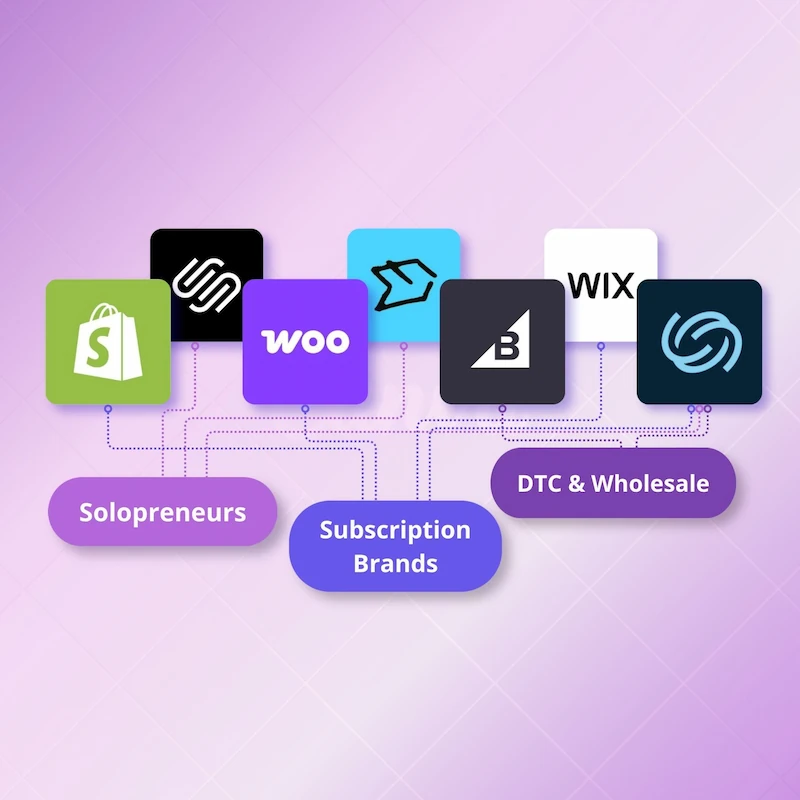
WooCommerce and Shopify are two of the most recognized names in ecommerce. Each has their pros and cons, which we're evaluating in this article alongside a third option, Merchant Tech. If you're a small business owner trying to figure out which platform makes the most sense for you, these are three of your best options.
We're not unbiased. But everything we say about Shopify and WooCommerce is pulled from their live pricing pages and publicly available information. Read critically, check our sources, and make your own call.
Why We're Adding a Third Option to This Comparison
WooCommerce and Shopify solve the same problem in opposite ways. WooCommerce gives you lots of control and low upfront cost but hands you a blank engine to assemble. Shopify gives you a strong store template out of the box but charges you for everything it doesn't include natively.
We're throwing Merchant Tech into the mix because it provides a strong starting framework (like Shopify), with flexibility to customize (like WooCommerce) but without the cost and technical burden of managing third-party apps, which neither Shopify or WooCommerce can say.
The platform you choose often depends on the product you're selling or the niche you're in, the stage of your business, and cost or timeline constraints. We'll walk you through all three platforms — the good, the real costs, and who each one is built for.
WooCommerce: What It Gets Right (And Where It Falls Short)
WooCommerce is an open-source ecommerce plugin for WordPress. The core plugin is free to install, you own your data outright, and in terms of customization, WooCommerce gives you more control than any other platform on this list. If you want to touch every line of code, control every function, and extend your store in any direction you can imagine — WooCommerce is the answer.
What WooCommerce genuinely does well:
- Free to install, no mandatory licensing fees
- Full ownership of your store data
- Runs on WordPress — the most widely used CMS in the world
- Deeply customizable through 6,000+ plugins (4,600+ free, 1,400+ paid)
- Strong SEO tools baked into WordPress with plugins like Yoast and RankMath
The problem is what "free" actually means once you try to run a real store.
The Cost of Running WooCommerce
WooCommerce is technically free the way a puppy on Facebook Marketplace is technically free. The plugin costs nothing. What it takes to run a production-ready online store is a different story.
To go live with a functional WooCommerce store, you need:
- Managed hosting: Entry-level managed WordPress hosting (Bluehost, SiteGround, WP Engine) runs $20–$40/month. Higher-traffic stores pay $100+/month.
- Domain: ~$15/year
- SSL certificate: Usually free from your host via Let's Encrypt, but premium SSL certificates (EV or wildcard) run $20–$280+/year
- WooCommerce Subscriptions (if you sell subscription products): $279/year (~$23/month) — this is the official plugin from WooCommerce/Automattic, not a third-party workaround
- Payment gateway: WooCommerce Payments exists, but many merchants use Stripe, PayPal, or another processor, each with their own transaction fees
- Security plugin: WooCommerce doesn't include malware scanning, brute-force protection, or real-time monitoring natively. That's another plugin.
Add it up: a lean, functional WooCommerce store typically runs $50–$200+/month before premium themes or marketing tools. And that's if nothing breaks.
Beyond cost, there's a technical reality worth sitting with before you decide. Every plugin you add increases complexity. Plugins can conflict with each other. Updates may break things unexpectedly. Managing a WooCommerce store long-term means either having developer skills yourself or paying for ongoing developer support. For the right business, that's a reasonable trade-off. For most small business owners without that background or resources, it isn't.
WooCommerce works well for: Businesses with a developer on retainer or technically confident owners who genuinely want code-level control of their ecommerce platform.
Shopify: What It Gets Right (And Where It Falls Short)
Shopify is the closest thing ecommerce has to a household name and there's a reason for that. It's regarded as the fastest way to go from zero to a live online store because it offers a framework to start from.
For anything not included in your plan, the Shopify App Store has over 20,000 apps. Support is available 24/7 via live chat. Uptime is reliable. If you want to build an online store on a hosted platform instead of developing the ecommerce infrastructure yourself, Shopify makes that possible.
Compared to WooCommerce, there is less flexibility and control. For anyone with a web development background, Shopify can feel restrictive. For others, it's not a concern.
Ecommerce success isn't always determined by how much freedom you have in the backend. But it is driven by the strength of your offer, your traffic, and your ability to convert customers. While Shopify may not let you do everything, it can remove much of what you would otherwise have to manage and put your focus on improving your sales.
You don't have to worry about hosting, updates, and as many manual fixes. If you're not a developer and you just want to get an ecommerce business off the ground, you'll probably find Shopify easier to use.
What Shopify genuinely does well:
- Fastest path from zero to live store
- Largest app ecosystem in ecommerce (20,000+ apps)
- Excellent uptime and fully managed infrastructure
- Strong built-in analytics on all plans
- 24/7 support via live chat
- Automated sales tax calculations included on all plans
Now for the part that decides if it's the right fit for you.
The Real Cost of Running Shopify
Shopify's entry plan is $39/month paid monthly, or $29/month on an annual contract. Most small businesses that grow past solo-founder stage end up on the Grow plan — $105/month paid monthly, or $79/month on an annual contract.
That price is just the starting point.
If you use a third-party payment processor instead of Shopify Payments, Shopify charges an additional transaction fee on top of what your processor already charges. On the Grow plan, that's 1%. On Basic, it's 2%. These are two separate charges stacked on the same transaction.
The apps pile up. The Shopify App Store is the platform's biggest strength and one of the places where costs compound the most. Apps for product subscriptions, customer reviews, page builders, and shipping each carry monthly fees. And some apps in the ecosystem charge their own transaction fees on sales processed through them. It's possible to end up paying your card processor, then Shopify's fee for using that processor, then an app fee on top.
A realistic monthly cost for a mid-tier merchant on the Grow plan:
- Plan: $79/month (annual)
- Product Subscription app (Bold Subscriptions, Recharge, etc.): $49–$99/month
- Email marketing beyond Shopify's built-in limits: $45+/month
- Reviews app: $15–$30/month
- Variable card processing fees on every transaction
Before a single sale, you're looking at $200–$350+/month — plus extra transaction fees depending on which apps you use.
Shopify works well for: Merchants with little technical expertise who want to quickly launch an ecommerce store, don't mind that they don't have complete control under the hood, and are comfortable with variable transaction fees and the piling cost of apps.
Merchant Tech: What We Built and Why
We built Merchant Tech because we saw small business owners get squeezed out — by Shopify's compounding app costs, by WooCommerce's technical overhead, by the gap between what a platform advertised and what it actually cost to run.
That's why we keep pricing simple and predictable: $79/month, flat. No apps or add-ons. Check our pricing page — there are no tiers, no product limits, and no limits to user accounts.
On fees: Merchant Tech charges a CC transaction fee starting from 2.9% + $0.30 per transaction. That's it. There are no apps charging their own transaction fees on top. What you see is what you pay.
What's included at $79/month:
- Native website hosting — no separate hosting bill
- Automatic sales tax compliance — built in, not an add-on requiring a third-party tool
- Easy order processing for all sales channels — including subscriptions, DTC retail, and wholesale
- Built-in subscription billing — no separate subscriptions plugin required
- Website page customization — build and edit pages without being constrained by themes or templates
- Product bundles with intelligent inventory sync — bundle products together and let the platform automatically update component inventory as bundles sell, so stock levels stay accurate without manual adjustment
- Shipping optimization — a smart packing algorithm selects the right box for each order to reduce shipping costs, paired with real-time carrier rate shopping that surfaces the lowest available rate by distance
- B2B storefronts and order fulfillment — set up wholesale storefronts with private, per-customer pricing, dedicated product catalogs, and flexible payment terms including net terms and invoicing for your commercial accounts
- Priority customer support for everyone — direct access to human assistance on every plan, not just at an enterprise tier
- White-glove migration, handled for you, free of charge — we move your products, customer data, and order history from your current platform with zero downtime. Your store stays live throughout. No loss of sales during the switch. Completed in less than a day.
If you're currently on Shopify or WooCommerce and considering the move, see how migration works.
Merchant Tech doesn't have 10,000 apps. We don't cover every possible use case. But what we've built is based on real world merchant experiences and needs. That means everything is field-tested and made to beat the industry standard. If you need developer-level control that goes beyond what our platform supports, we may not be the right fit. But if you're only hung up on a feature or two we don't have right now, let us know. It wouldn't be the first time we custom-built something for a merchant.
Who Merchant Tech works for: Small business owners who want everything included, no developer required, and a predictable monthly cost with no apps and no fee stacking. If you've been researching Shopify alternatives, this is worth a look.
Head-to-Head Comparison: WooCommerce vs Shopify vs Merchant Tech
Swipe to see more →
| WooCommerce | Shopify (Grow) | Merchant Tech | |
|---|---|---|---|
| Monthly Price | $0 plugin + $50–$200/mo in hosting and plugins | $79/mo annual ($105/mo month-to-month) | $79/mo flat |
| Transaction Fees | Depends on processor chosen | Standard cards: 2.7% + 30¢ / Premium cards: 3.3% + 30¢ | Starting from 2.9% + $0.30 per transaction |
| Fee Stacking | Possible — some plugins add their own per-transaction fees | Yes — Shopify fees, processor fees, and app fees can layer on the same sale | No — one transaction fee, nothing stacked on top |
| Hosting Included | Extra cost | Included | Included |
| Native Subscription Billing | Via plugin ($279/year) | Via app ($49–$99+/mo) | Included |
| Sales Tax Compliance | Via plugin (extra cost) | Included (auto-filing has limits) | Included |
| Migration Support | DIY or hire a developer | DIY or hire a paid service | White-glove, free, zero downtime |
Which Platform Should You Choose?
Choose WooCommerce if you have a developer on staff or retainer, you want full code-level control of your online store, and you're comfortable managing your own hosting stack and plugin updates. WooCommerce gives you the most flexibility of any platform — provided you have the technical resources to use it.
Choose Shopify if you want access to the largest app ecosystem in ecommerce, and you're okay with a growing app bill as your store scales, or the possibility of having to upgrade to exponentially more expensive plans. Shopify is the right answer for merchants who want to launch quickly and use templated solutions.
Choose Merchant Tech if you want one predictable price, no stacked fees, no apps to manage, and the essential features included from the start. Merchant Tech is built for small business owners who want to focus on selling, not repeatedly reassessing their ecommerce budget or spending significant time building, maintaining, and rebuilding their store. It offers a practical middle ground between the complete flexibility (and responsibility) of WooCommerce and the more restrictive templates and platform boundaries of Shopify.
FAQ
Is WooCommerce really free?
The WooCommerce plugin is free to download and install. Running a functional online store is not. Once you add hosting ($20–$100/month), a domain (~$15/year), subscription billing if you need it ($279/year for the official WooCommerce Subscriptions plugin), a security plugin, and a payment gateway, a production-ready WooCommerce store typically costs $50–$200+/month. The plugin itself is free. The infrastructure required to actually run a store isn't.
How much do merchants actually pay for Shopify per month?
It depends on plan and app usage. The Grow plan is $79/month (annual) or $105/month (month-to-month) — but that's before apps. Add a subscription billing app ($49–$99/month), a reviews app, and any additional integrations. Then factor in card processing rates that vary by card type (2.7%–3.3% + 30¢ on the Grow plan). A realistic mid-tier Shopify merchant is typically paying $200–$350+/month before accounting for variable transaction costs.
Can I switch from Shopify or WooCommerce to Merchant Tech without losing my SEO?
Yes. Merchant Tech's white-glove migration is handled entirely by our team, with zero downtime — your store stays live throughout the entire process. That means no indexing gaps, no window where your URLs are broken or offline, and no loss of sales during the transition. We migrate your products, website, and inventory.
Does Shopify stack transaction fees on top of app fees?
Yes, in some configurations. There are two separate fee types that can layer. First, Shopify's card processing rates vary by card type — standard cards process at 2.7% + 30¢ on the Grow plan, while premium cards trigger 3.3% + 30¢. Second, if you use a third-party payment processor instead of Shopify Payments, Shopify charges an additional 1% transaction fee (on the Grow plan) on top of what your processor already charges. Beyond that, some apps in the Shopify App Store charge their own per-transaction fees on sales processed through them. Each of these is a separate charge — they can stack on the same transaction.
How long does it take to migrate from Shopify to Merchant Tech?
Migration is completed in less than a day. Our team handles the entire process — products, website, inventory — with zero downtime. Your store stays live throughout, so you don't lose sales or search rankings during the transition.
What ecommerce platform is best for small businesses that sell subscriptions?
For small businesses that want to offer subscriptions without a separate plugin cost, Merchant Tech includes it natively at $79/month flat. On WooCommerce, the official subscriptions plugin costs $279/year ($23/month) on top of hosting and other costs. On Shopify, subscription billing requires a third-party app like Bold Subscriptions or Recharge, running $49–$99+/month — and those apps may also charge their own transaction fees on subscription orders. If recurring billing is core to your business model, the real cost difference between platforms is significant and worth calculating before you commit.

Kate Maruyama: Kate is a Senior Editor at Merchant Tech where she oversees content that helps merchants understand platform tools, optimize their online stores, and grow their businesses.